
Rubber or Steel Tracks: Which Should You Choose for a Mini Excavator?
Rubber tracks vs steel tracks is a jobsite and configuration decision, not a universal upgrade. Excavator rubber tracks are generally gentler on finished surfaces, while steel tracks tolerate sharp debris and abrasive ground better. The right mini excavator tracks depend on the surfaces, travel route, undercarriage design and options approved for the exact machine.
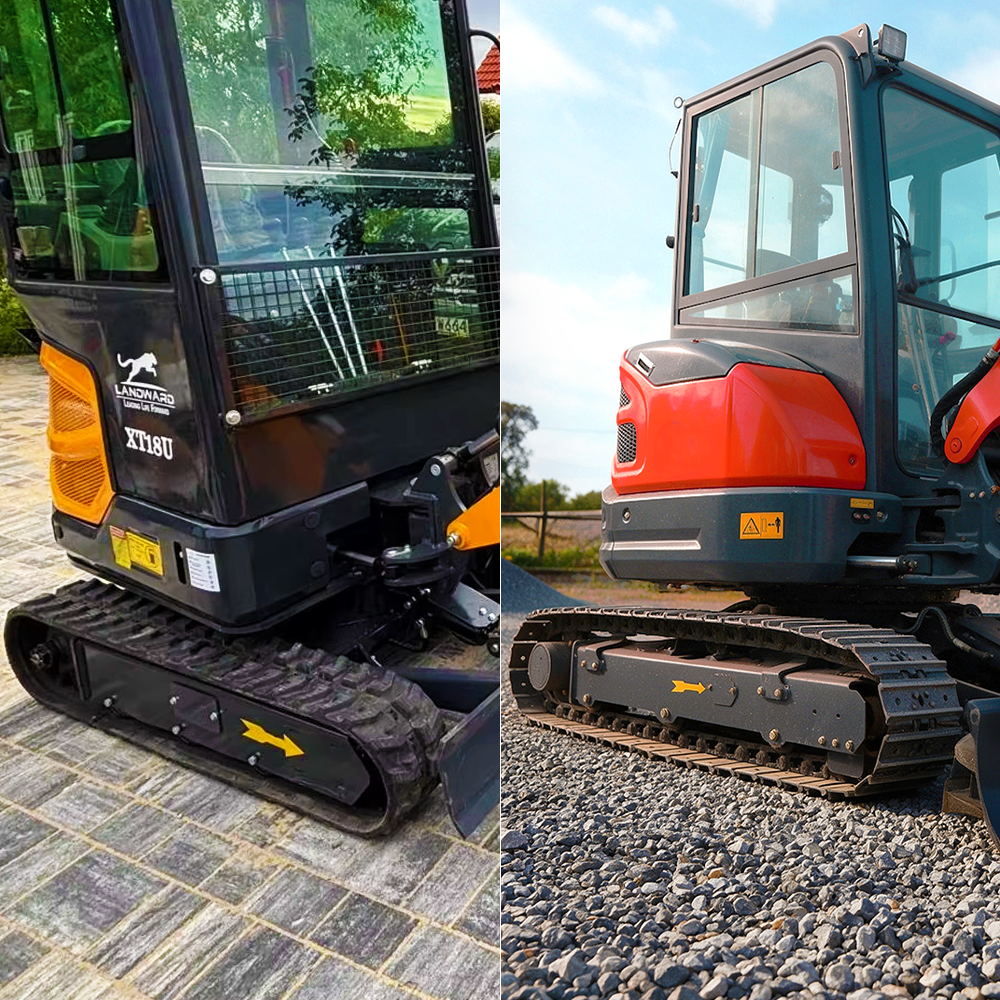
When are rubber tracks the better choice?
Rubber tracks commonly suit landscaping, residential access, paved areas and sites where surface marking or vibration matters. Their flexible construction can make travel smoother on hard ground and reduce direct contact from exposed steel shoes. This does not guarantee damage-free operation: machine mass, turning technique, track condition and weak pavement can still cause marks.
Excavator rubber tracks need regular inspection for cuts, embedded material, uneven wear and incorrect tension. A machine may dig mainly in soil but cross broken concrete or sharp demolition waste between work zones. Buyers should evaluate the complete route, because short exposure to damaging debris can influence track life and operating cost.
When should contractors consider steel tracks?
Steel tracks are often considered for rocky ground, abrasive material and debris-heavy construction where repeated sharp contact can challenge rubber. Their durability in such conditions must be balanced against possible surface damage, vibration, noise and transport implications. Steel is not automatically the best answer simply because the job is described as heavy duty.
The comparison of rubber tracks vs steel tracks should include how far the machine travels, how often it turns on hard surfaces and whether finished areas require protection. Contractors should also consider cleaning, tension checks and component wear. No track material guarantees superior traction or lower ground pressure in every condition; the complete undercarriage and machine setup matter.
Can one track type be converted to the other?
Not automatically. Track width alone does not prove fitment, and mini excavator tracks interact with sprockets, rollers, idlers, tensioning components and available clearances. A complete conversion should follow manufacturer approval and model-specific specifications. Ordering by general machine weight or visual similarity creates avoidable compatibility risk.
Rubber pads fitted to compatible steel shoes may protect surfaces in some applications, but they are not the same as a complete rubber track system. Pad type, fastening method, clearance and maintenance requirements must be confirmed. Likewise, excavator rubber tracks should be ordered using the exact machine and undercarriage specification rather than a broad size label.
What should B2B buyers compare before ordering?
Prepare a site profile covering pavement, soil, rock, demolition debris, slopes, travel distance, turning frequency and noise sensitivity. Then compare approved configurations, transport weight, inspection needs and replacement support for the intended market. Dealers should also confirm how the chosen setup affects stocking and service planning.
Ask the supplier to identify the quoted undercarriage and provide maintenance guidance. If sites conflict, prioritize where the machine spends most hours rather than one unusual task.
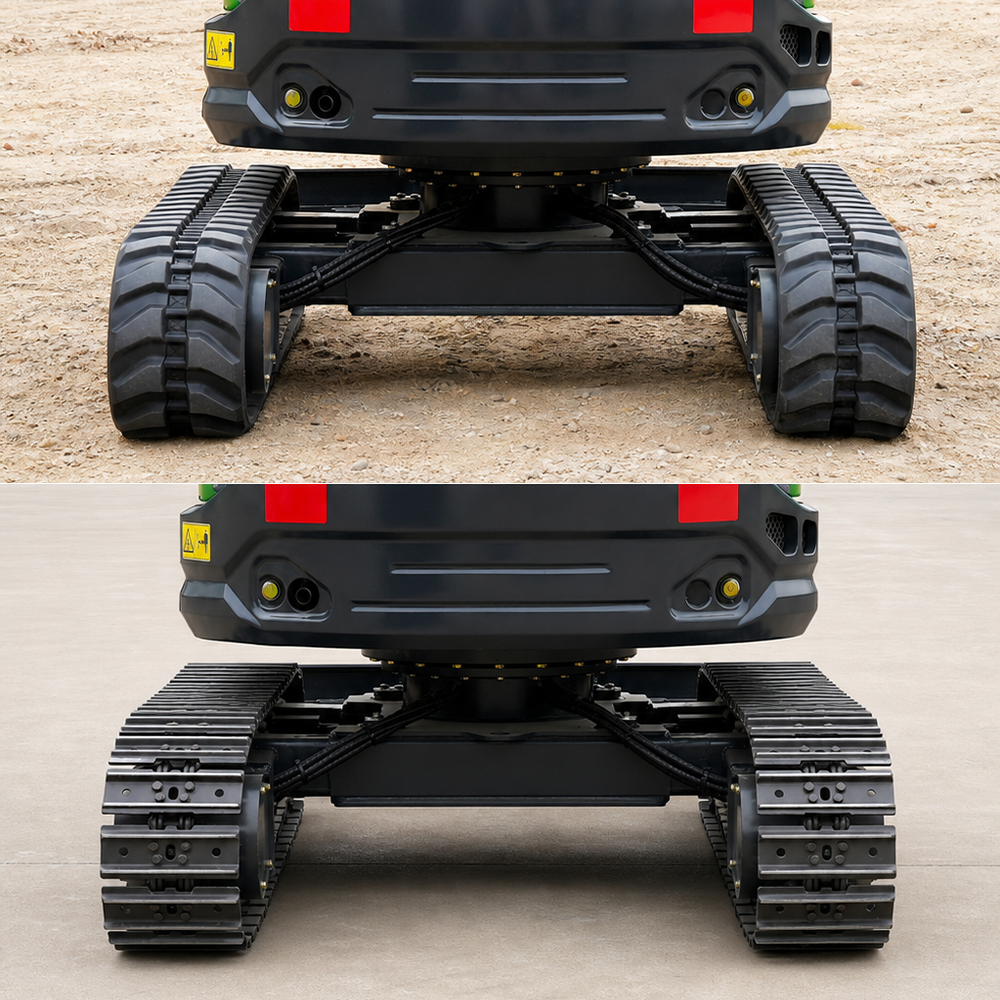
Match LANDWARD track options to daily site conditions
Choose mini excavator tracks around the surfaces and materials the machine will meet most often. When discussing a LANDWARD mini excavator, share site photographs, travel routes, debris exposure and the exact model requirement. LANDWARD can help confirm whether an available rubber or steel configuration matches that model; buyers should not assume all versions are interchangeable.