
Mini Excavator Width: How to Check Access Before Buying
Mini excavator width helps determine whether a machine can enter a site, but width alone does not confirm that it can work there. Buyers must check the complete route, the machine’s specified configuration, and the space needed once excavation begins. For landscaping, drainage, and residential construction, assessing access before ordering can prevent a suitable digging machine from becoming an unsuitable choice for the property.
Where should you measure site access?
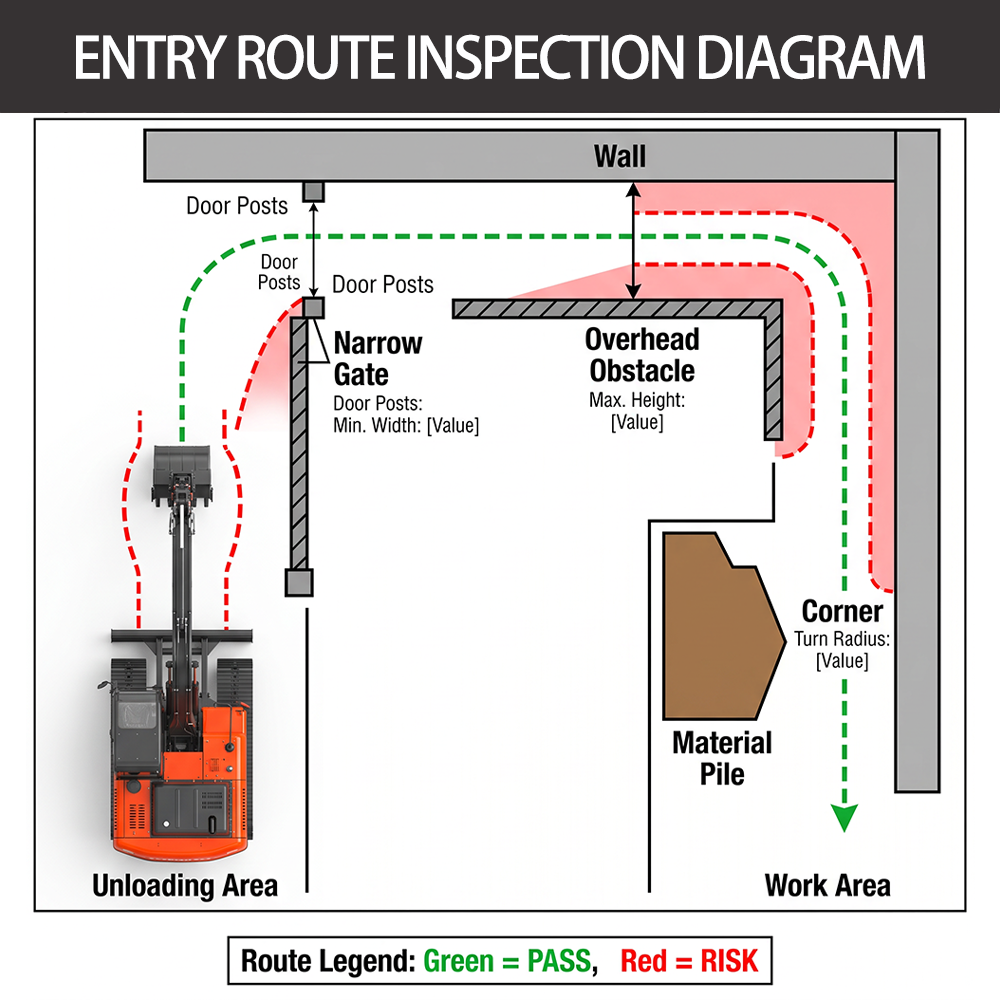
Walk the entire route from the unloading area to the work zone. Measure the narrowest clear opening, not just the nominal gate size. Gate hinges, posts, wall projections, stored materials, and uneven surfaces can reduce usable space. Record overhead restrictions separately, including branches, eaves, and door frames.
Look beyond straight passages. A machine may pass between two posts yet lack room to turn immediately afterward. Photograph changes in direction and note nearby walls or occupied areas. Provide these details to the equipment supplier and the person responsible for planning safe movement on site.
Which machine dimensions should you check?
Request the dimensional drawing for the exact model and configuration being quoted. Check overall width, height, transport length, blade width, and any attachment or component extending beyond the tracks. Confirm the measurement units and the machine position used in the drawing, particularly where the boom is folded for transport.
Some excavators have a retractable undercarriage, but this feature must be confirmed for the selected model. Where fitted, obtain both retracted and extended dimensions and follow the manufacturer’s operating instructions. Do not assume the narrower travel arrangement is the approved configuration for every digging or lifting task.
Does entering mean you can work?
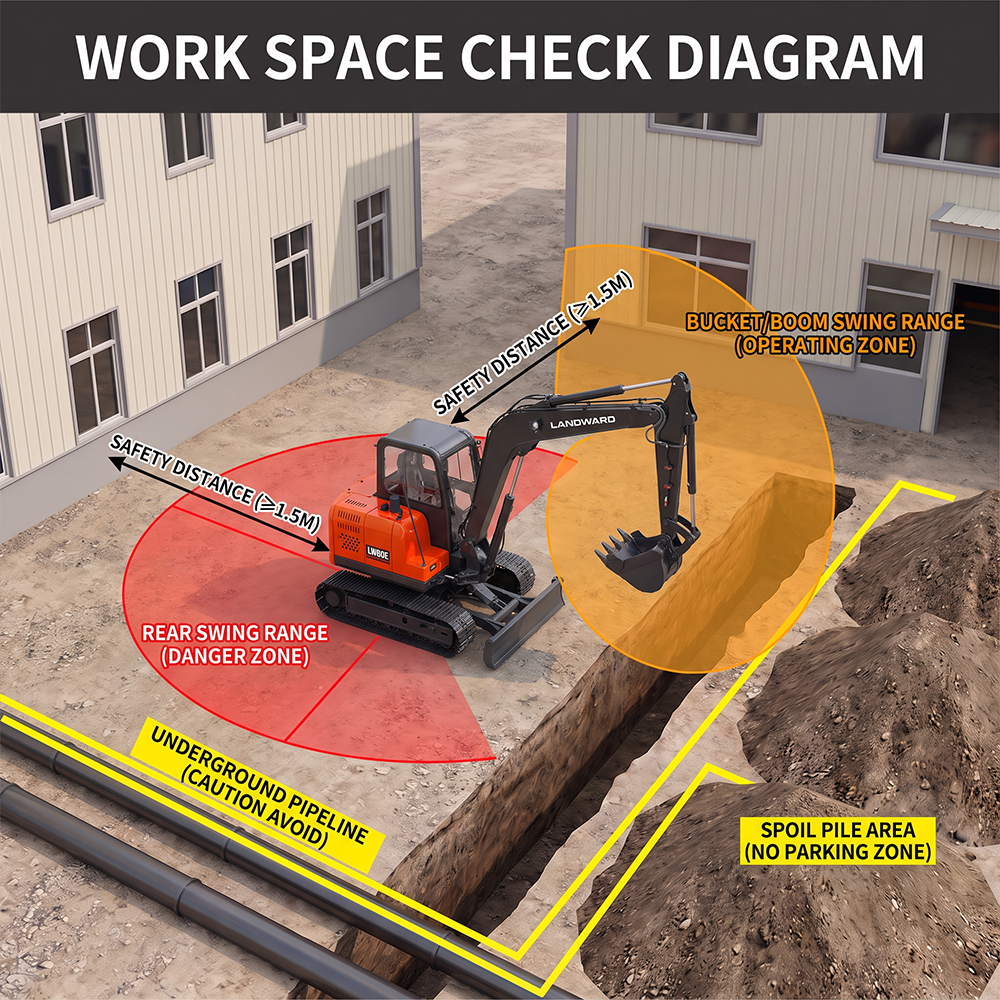
No. Access clearance and working clearance are different checks. Once positioned, the excavator needs room for the boom, arm, bucket, upper structure, and the planned movement of material. Tail swing describes one part of that movement; it does not account for every projection or eliminate collision risks.
Consider a drainage project beside a house. The machine needs a suitable position for reaching the trench, handling spoil, and avoiding nearby structures. Ground support, excavation edges, and underground services also require assessment. A narrow machine is not a substitute for a site safety plan or competent operating judgment.
What should an access brief contain?
Create a simple sketch showing the unloading point, narrow openings, turns, overhead obstacles, and proposed digging positions. Add the required excavation depth and the intended bucket or attachment. This gives the supplier a more useful problem to evaluate than a request for the smallest available excavator.
Record unresolved excavator dimensions before comparing models, and seek clarification rather than estimating from product photographs. Any allowance for movement must reflect the actual route and operating conditions. If access depends on modifying a gate, removing an obstacle, or using a special configuration, confirm that arrangement before purchasing.
Match access to the complete task
Use mini excavator width as the starting measurement, then assess the full route and working area. LANDWARD offers mini excavators for applications including landscaping, utilities, and small construction. Share your access sketch and task requirements with LANDWARD to compare suitable models. Confirm dimensions and available configurations individually, so the final choice balances entry, positioning, and the excavation work itself.