
Mini Excavator Bucket Sizes: Match the Bucket to the Job
The right mini excavator bucket matches the task, material, connection, and capabilities of the machine. Width is important, but it is not enough to establish suitability. Bucket weight, capacity, shape, and mounting dimensions also affect the choice. For contractors handling trenching, general excavation, and finishing work, selecting a practical bucket combination is more useful than assuming the largest available bucket will deliver the best results.
Which bucket shape suits the task?
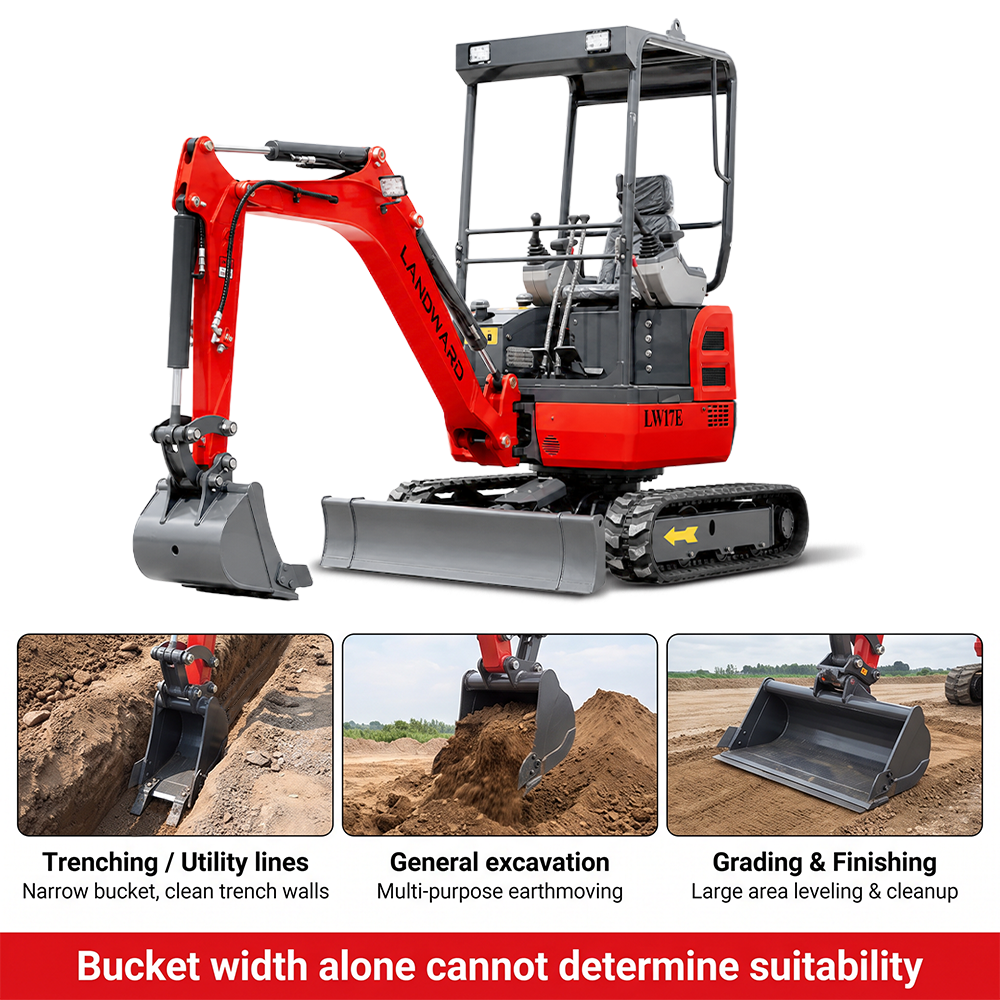
Start with the required result. A narrow trenching bucket may suit a defined utility trench, while a general digging bucket supports broader excavation. A wider grading or ditching bucket can be appropriate for cleaning and finishing. These descriptions identify typical roles, not permission to use any bucket on any machine.
For drainage work, the planned trench and installation requirements should guide the selection. For landscaping, the desired finish and material handling tasks may lead to another choice. Discuss the actual application before buying an attachment based on its name or a photograph of similar work.
Why does material affect bucket selection?
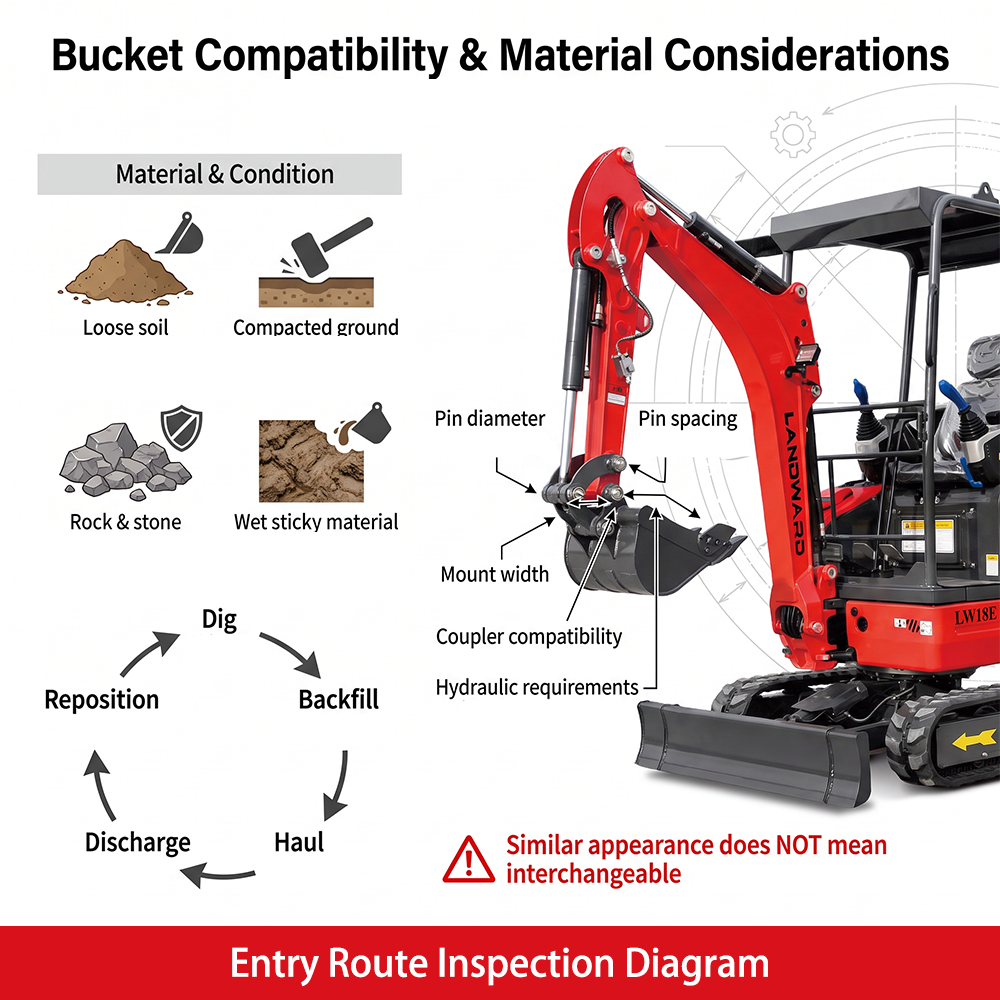
Loose soil, compacted ground, stones, and wet material present different handling conditions. Material density changes the load carried in a filled bucket, while resistance to digging affects how readily the machine can penetrate and fill it. A wider bucket does not automatically produce faster excavation.
Consider the complete cycle: digging, filling, moving, discharging, and repositioning. An oversized tool can be awkward in restricted trenches or poorly matched to demanding ground. Ask the equipment supplier to confirm an appropriate bucket type and capacity for the machine and material rather than selecting by width alone.
How do you confirm mechanical compatibility?
Check the exact excavator model and attachment interface. Confirm pin diameter, pin spacing, mounting width, and coupler compatibility against the manufacturer’s information. Similar machine weights or visually similar brackets do not prove that two attachments are interchangeable. Request a dimensioned drawing when the connection is unclear.
Include the coupler and other installed equipment when discussing attachment weight and geometry. A bucket that physically connects is not necessarily an approved match for the machine’s operating limits. For powered tilting equipment, hydraulic requirements also need confirmation. Installation, locking checks, and operation must follow the relevant equipment instructions.
What makes a useful bucket package?
List the tasks performed most often and choose tools around those priorities. A contractor handling both narrow drainage and surface finishing may benefit from separate buckets, subject to compatibility. Buying several similar sizes without a clear role adds storage and transport demands without resolving a specific job requirement.
For each proposed excavator bucket, record its intended task, width, capacity, weight, connection details, and confirmed machine match. Include inspection and wear-part requirements in the purchasing discussion. This compact comparison sheet helps distinguish a genuinely useful attachment package from a bundle that simply contains more items.
Specify the machine and bucket together
Choose a mini excavator bucket around the work rather than one isolated dimension. LANDWARD’s excavator and attachment offering allows buyers to discuss the machine and tool as a combined configuration. Provide the selected model, material, trench or finishing requirements, and connection information. Confirm the available bucket options before ordering, with suitability and manageable operation taking priority over maximum width or capacity.