HOW TO CHOOSE THE RIGHT EXCAVATOR SIZE FOR YOUR PROJECT
Choosing the right excavator starts with the work, not simply with the largest machine available. The best size should fit the jobsite, reach the required digging depth, handle the planned attachments, and remain practical to transport and operate.
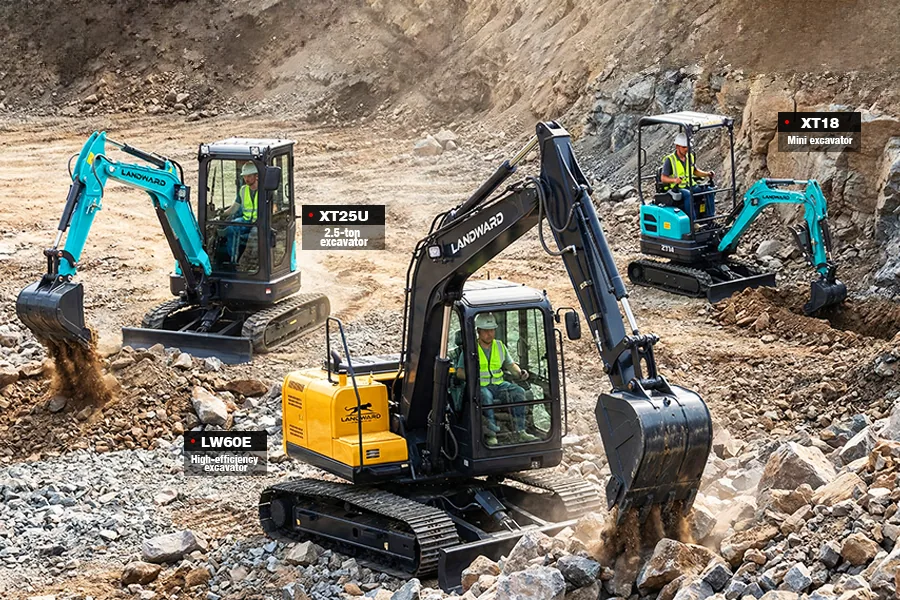
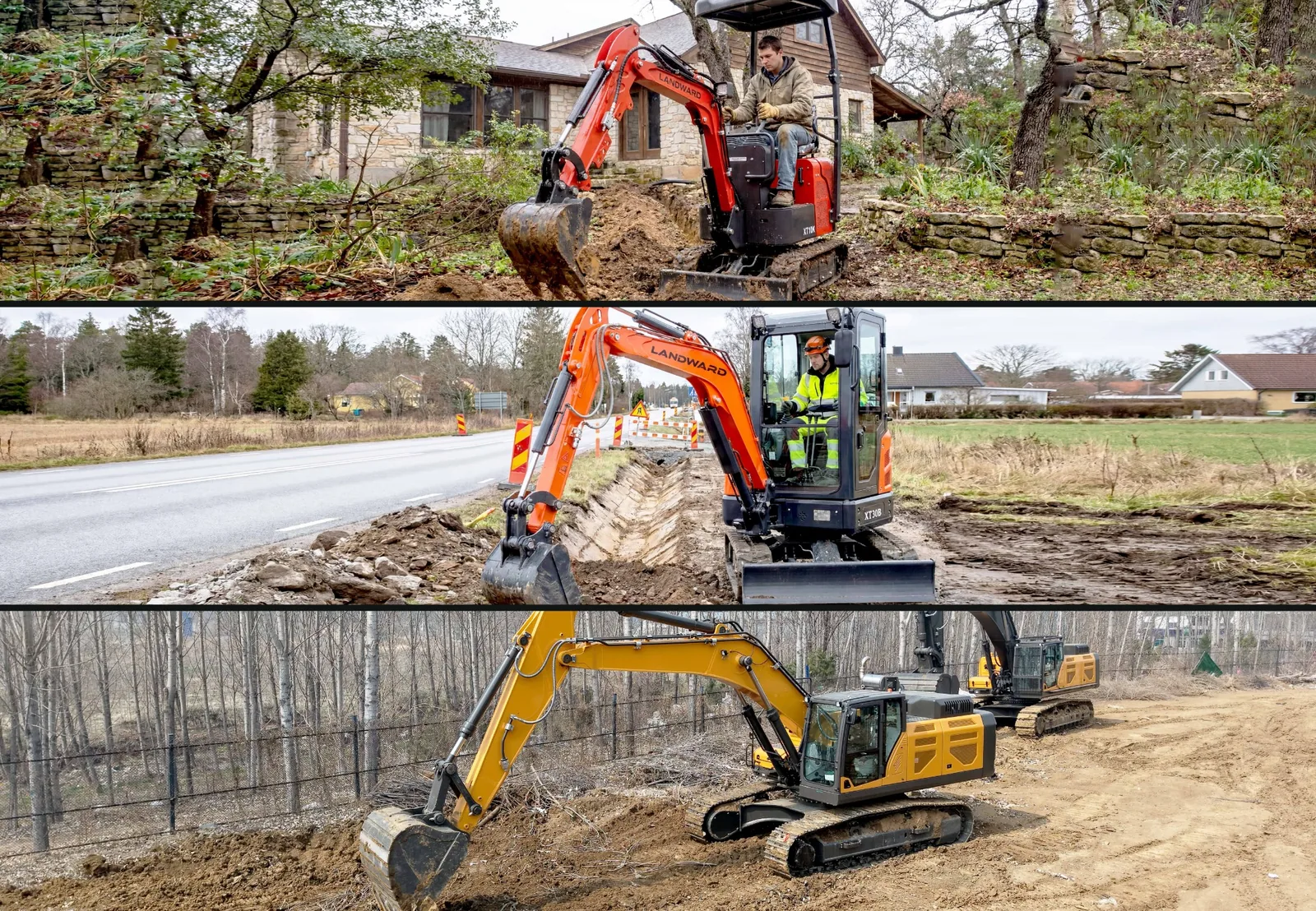
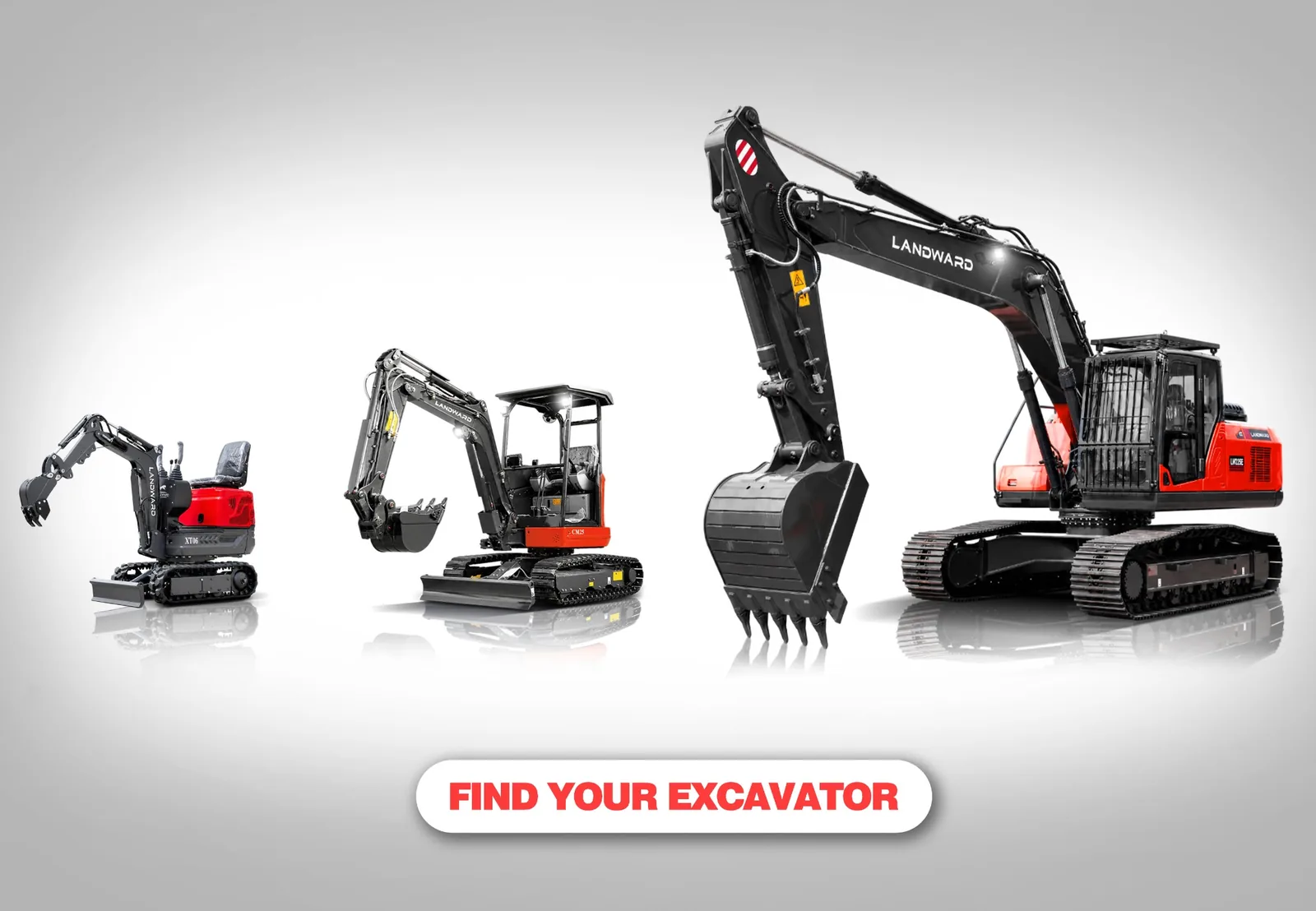
In general, mini excavators suit restricted spaces and lighter work, medium excavators balance versatility and production, while heavy excavators support demanding earthmoving and large construction projects.
WHAT WORK WILL THE EXCAVATOR PERFORM?
Begin by listing the machine’s main tasks. Trenching, landscaping, utility installation, foundation work, material handling, demolition, and bulk excavation place different demands on an excavator.
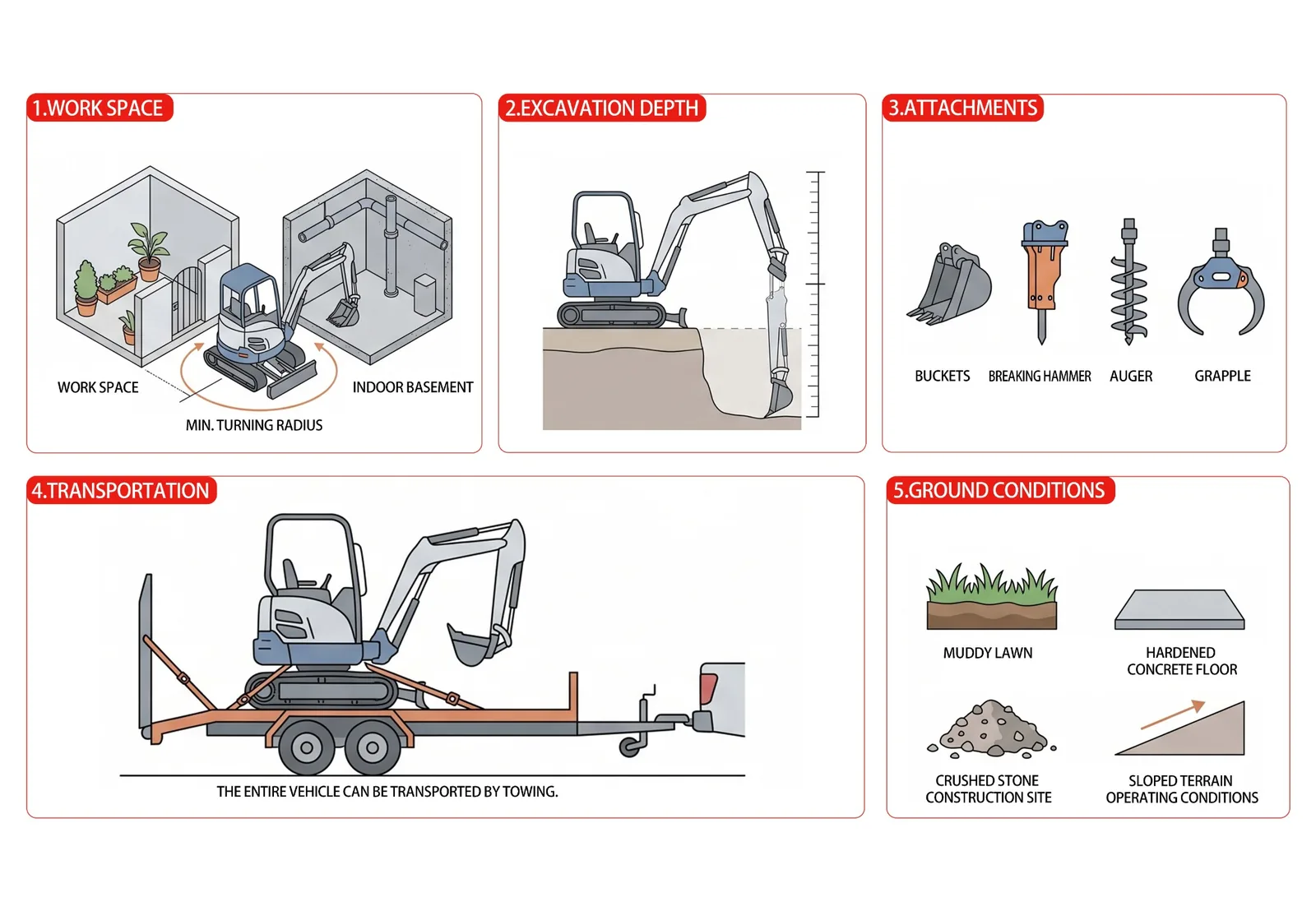
Consider the required digging depth, reach, bucket capacity, lifting needs, and expected ground conditions. A machine that is too small may require more digging cycles, while an oversized excavator may be difficult to position and unnecessarily complex to move between jobsites.
Attachments also affect machine selection. A standard bucket may require less hydraulic capacity than a breaker, auger, grapple, or another hydraulic attachment.
Before selecting a model, confirm that the excavator’s auxiliary hydraulic flow, pressure, operating weight, and attachment interface are suitable for the intended tool.
HOW MUCH SPACE IS AVAILABLE?
Measure gateways, paths, working areas, and overhead restrictions before comparing models. Mini excavators are useful for gardens, property work, narrow-access construction, and utility projects because their compact dimensions improve access.
Medium excavators are often selected for general construction, roadwork, commercial landscaping, and larger trenching tasks. Heavy excavators are designed for jobs where digging force, stability, reach, and production take priority over compact access.
Ground conditions matter as well. Machine weight, track width, undercarriage design, and ground pressure influence stability and movement.
Soft, uneven, muddy, hardened, or sloped sites require careful evaluation rather than selection by tonnage alone.
CAN THE MACHINE BE TRANSPORTED AND SUPPORTED?
Transport is part of the buying decision. Check the machine’s transport dimensions and operating weight against available trailers, trucks, loading equipment, and local transport requirements.
Buyers should also consider fuel use, routine service access, spare-parts planning, operator experience, and the availability of suitable attachments.
Comparing total jobsite suitability is more useful than comparing one specification in isolation. A machine must be practical not only while digging, but also while being transported, maintained, and operated throughout its working life.
CHOOSE AN EXCAVATOR AROUND THE APPLICATION
The right excavator is the machine that matches the task, site, attachment, and transport plan.
LANDWARD offers Mini Excavators from 0.6–6 tons, Medium Excavators from 6–26 tons, and Heavy Excavators over 26 tons.
Share your working conditions, required digging depth, attachment needs, transport requirements, and target market with LANDWARD to identify an appropriate model and configuration.