
What Is Boom Swing on a Mini Excavator, and When Is It Useful?
Mini excavator boom swing lets the excavator boom pivot left or right at its mounting point, placing the excavator arm and bucket away from the machine centreline while the tracks remain in position. It supports offset digging beside walls and obstacles. It is different from rotating the upper structure and from zero tail swing.
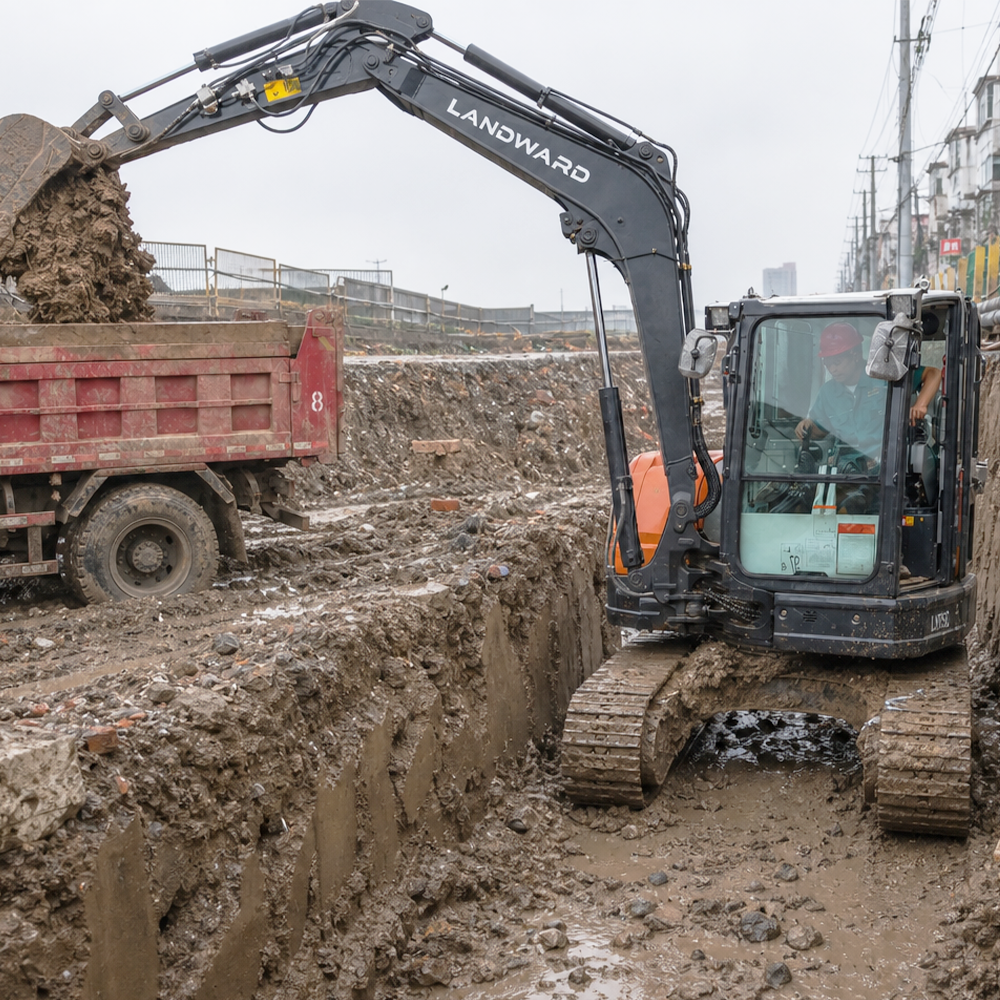
How does boom swing create an offset digging position?
A hydraulic mechanism moves the boom sideways relative to the cab and undercarriage. The excavator boom changes lateral alignment, while the excavator arm and bucket retain the reach defined by the working geometry. This can align the bucket with a trench not directly in front of the tracks.
Mini excavator boom swing is particularly useful when the machine must travel parallel to a boundary but dig closer to it. The operator may reduce some repositioning, although the benefit depends on access, trench layout, attachment clearance and usable reach. Boom swing does not increase the machine’s stated maximum digging depth.
Is boom swing the same as upper-structure or tail swing?
No. Boom swing changes the alignment of the digging equipment. Upper-structure slewing rotates the cab, engine housing, excavator boom and attachment together around the slew centre. Tail swing describes how far the rear of that upper structure extends beyond the tracks during rotation. These are separate specifications and must be checked separately.
A machine with mini excavator boom swing does not automatically have zero tail swing, and a short rear overhang does not prove independent boom offset. Neither feature removes the need for clearance around the bucket, excavator arm, counterweight and people. Buyers should review the working envelope and access route.
Which jobs benefit from an offset boom?
Typical applications include drainage trenches beside buildings, landscaping near fences, utility work along roads and excavation around obstacles. In these situations, moving the excavator arm sideways relative to the tracks can help the bucket reach the required line while the undercarriage stays in a practical travel position.
On an open site, other specifications may matter more, including digging depth, reach, transport dimensions and attachment compatibility. Before work near services or structures, identify utilities, assess ground support and establish an exclusion zone. Sideways bucket force should not be used as a substitute for movements permitted by the operating instructions.
What should buyers verify in a supplier quotation?
Confirm that boom swing is included on the exact quoted model and configuration. Request left and right swing limits, control information, working-range drawings, visibility guidance and any operating restrictions. Check bucket and attachment clearance through the required positions, especially beside walls, fences or trench shields.
Do not assume boom swing proves auxiliary hydraulics are available for a breaker or auger; those circuits and flow requirements require separate verification. Dealers should also confirm service access around the pivot, cylinder and hoses.
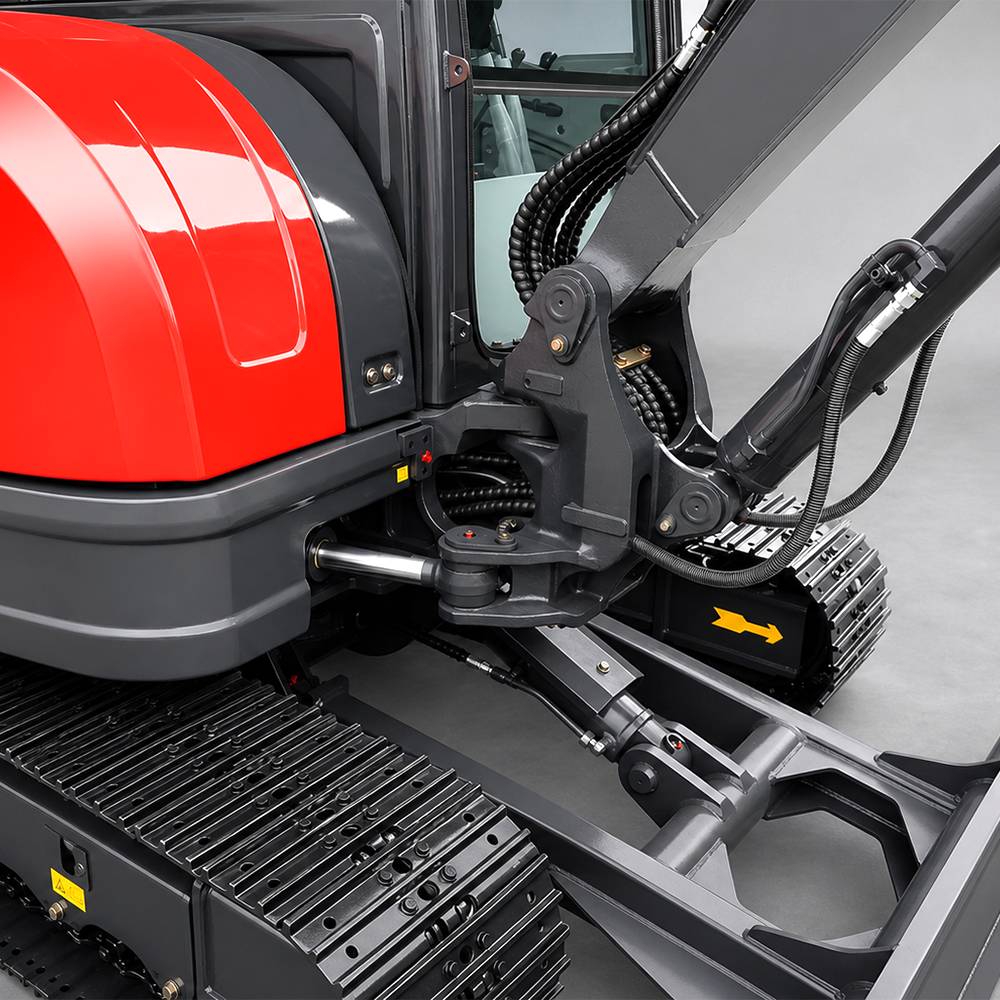
Specify a LANDWARD excavator for the working space
Boom swing is valuable when the trench line and machine position cannot align easily. For a LANDWARD mini excavator, provide access width, trench location, obstacles and attachment requirements. LANDWARD can help confirm the selected model’s boom-swing configuration and working envelope before ordering, so the excavator boom and attachment arrangement match the real site rather than a feature label alone.