
Four Types of Excavator Quick Couplers: Functions and Uses
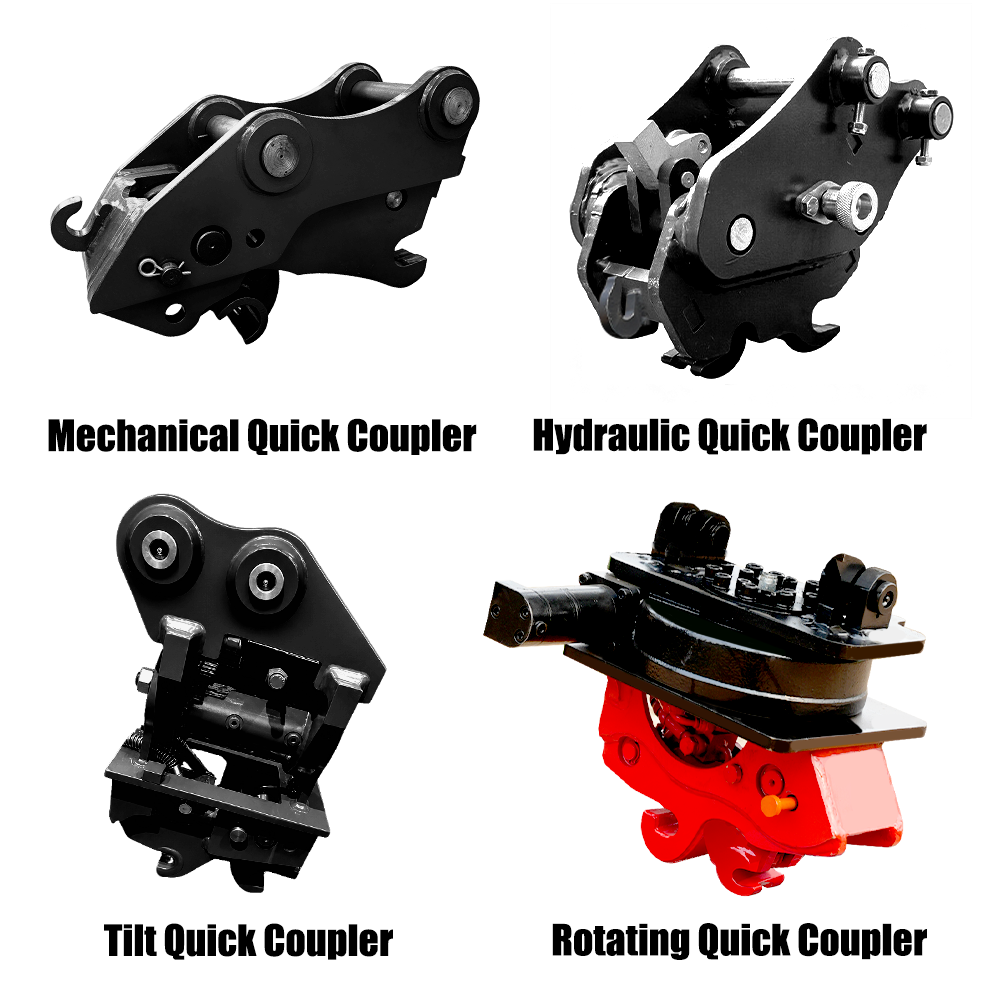
A mini excavator quick coupler connects the dipper arm to a compatible bucket or work tool so the operator can change attachments more efficiently. The four common choices are mechanical, hydraulic, hydraulic tilt and hydraulic rotating couplers. Mechanical designs prioritize simplicity; hydraulic designs reduce manual locking work; tilt couplers add side-to-side positioning; and rotating couplers add broader tool orientation. The right option depends on change frequency, required movement, machine capacity, hydraulic provision, attachment dimensions and jobsite practice—not simply on which design has the most functions.
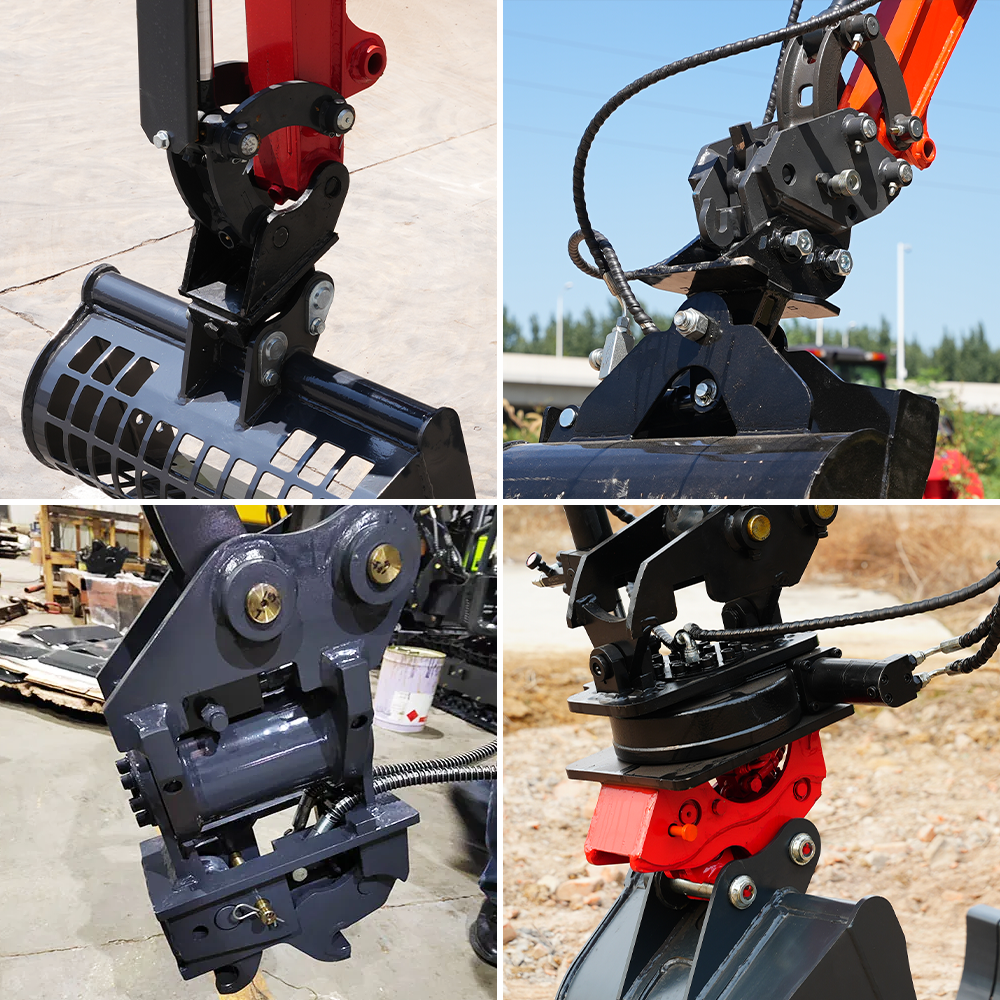
What Does an Excavator Quick Coupler Do?
The coupler sits between the excavator arm and an approved attachment. A correctly matched mini excavator quick coupler can connect compatible digging, trenching or grading buckets and may support breakers, augers, grapples or rippers when the mounting geometry, weight and hydraulic requirements agree with the machine and coupler documentation. Physical pin engagement alone does not prove full compatibility. Coupler weight and offset can also change working geometry, breakout performance, stability and rated capacity.
How Does a Mechanical Quick Coupler Work?
A mechanical quick coupler uses a hand-operated pin, wedge, screw or lever to secure a compatible attachment. It does not need a dedicated hydraulic locking circuit, making it practical for mini excavators that change tools only occasionally. It commonly handles compatible buckets and non-hydraulic tools; powered attachments still need the correct auxiliary hoses and controls. Its advantages are straightforward construction, lower system complexity and accessible maintenance. Its limitations are more manual effort, a need to leave the cab in normal procedures, and careful locking inspection before work.
Best suited applications: Occasional bucket changes, landscaping, property maintenance and fleets that value simple service requirements.
Key advantage: Straightforward construction, lower system complexity and fewer hydraulic locking components.
Main limitation: The operator normally leaves the cab, changeovers require more manual work, and the lock must still be inspected and tested according to instructions.
How Does a Hydraulic Quick Coupler Work?
A hydraulic cylinder operates the locking mechanism, allowing the operator to engage or release compatible attachments from the cab when the approved procedure permits. Buyers searching for a hydraulic quick coupler excavator package usually value frequent tool changes in utilities, landscaping and general construction. A hydraulic pin grabber quick coupler for excavator fleets can pick up attachments with compatible pin geometry, but pin diameter, pin spacing, dipper-arm width, tool weight and machine capacity still require confirmation.
A hydraulic quick coupler excavator setup reduces repeated manual locking work, yet it adds hoses, controls, inspection and maintenance points. A hydraulic pin grabber quick coupler for excavator use must be visibly confirmed as fully engaged and checked as instructed before the attachment is raised. Hydraulic connection does not eliminate the need to connect tool hoses, follow the manual or keep people clear during changes.
Best suited applications: Fleets, utilities, landscaping and general construction where operators change buckets or tools frequently.
Key advantage: Reduces repeated manual locking work and supports faster workflow between compatible tools.
Main limitation: Adds hydraulic components, installation and maintenance; hoses may still require manual connection and engagement must be verified.
When Is a Hydraulic Tilt Coupler Useful?
A hydraulic tilt coupler adds side-to-side attachment movement through a hydraulic actuator. It is especially useful with compatible grading or ditching buckets for shaping slopes, drainage channels, road shoulders and landscaped surfaces. Tilting can reduce repeated machine repositioning and help the bucket follow an angled profile. However, the assembly adds weight, height, hydraulic demand and maintenance points. The supplier must confirm the available tilt range, machine capacity, hose routing and effect on digging geometry for the specific combination.
Best suited applications: Slope grading, drainage profiles, road shoulders, landscaping, ditch shaping and working around obstacles.
Key advantage: Improves angle control and can reduce machine repositioning during finishing work.
Main limitation: Adds weight, height, hydraulic demand and service points; exact tilt range and capacity effects vary by model.
What Does a Hydraulic Rotating Coupler Add?
A hydraulic rotating coupler adds a powered rotator so an approved bucket, grading tool, grapple or other attachment can be repositioned around its working axis. This supports complex grading, trench finishing, landscaping, material placement, sorting and confined work where tool orientation matters. It offers the greatest positioning flexibility of the four types, but also the greatest system complexity. Buyers must verify whether rotation is continuous or limited, along with weight, hydraulic flow, pressure, controls, hose routing and service access.
Best suited applications: Complex grading, trench finishing, landscaping, material positioning, sorting and confined construction work.
Key advantage: Offers the greatest tool-positioning flexibility of the four types and can reduce carrier movement.
Main limitation: Has the greatest system complexity, added weight, hydraulic and control requirements, hose-routing demands and service needs.
Which Quick Coupler Fits Your Work?
Choose mechanical when changes are occasional and simple ownership is the priority. Choose hydraulic when compatible attachments change frequently. Choose hydraulic tilt for repeated slope, ditch and grading work. Choose hydraulic rotating when multidirectional positioning justifies the extra hydraulic and maintenance requirements. No type is automatically best: the correct choice balances daily tasks, change frequency, control needs, purchase cost, service capability and the effect of the coupler on the excavator’s working envelope.

What Must Buyers Confirm Before Ordering?
Provide the excavator make, model and operating weight; pin diameter, pin-centre spacing and dipper-arm width; and each attachment’s model, weight and connection layout. For powered couplers and tools, confirm auxiliary hydraulic flow, working pressure, circuit direction, controls, hoses and connectors. Also review locking indicators or safety devices, inspection procedures, operator training, local rules, and the machine, coupler and attachment manuals. Test the locked connection exactly as instructed before raising or using any attachment.
•Excavator make, model and operating weight
•Pin diameter, pin-centre spacing and dipper-arm width
•Attachment make, model, weight and mounting layout
•Auxiliary hydraulic flow and working pressure
•Circuit direction, controls, hoses and connectors
•Locking indication or safety device where applicable
•Machine, coupler and attachment manuals
•Local rules, inspection requirements and operator training
Match the Coupler to the LANDWARD Excavator and Job
A productive coupler package starts with verified compatibility, not a generic product label. Tell LANDWARD your excavator model, attachment list, pin dimensions, dipper-arm width, tool weights, required movements, hydraulic flow, pressure and circuit details. LANDWARD can then help review a suitable excavator, coupler and attachment combination for the intended work, while the applicable manuals and local operating rules remain the final authority.