MINI EXCAVATOR VS. MEDIUM EXCAVATOR: WHICH ONE FITS YOUR WORK?
The main difference between a mini excavator and a medium excavator is how each balances access, performance, transport, and jobsite output.
A mini excavator is usually the better choice for restricted spaces, lighter excavation, and frequent transport. A medium excavator is more suitable when the work requires greater digging capability, stability, reach, attachment capacity, and sustained production.
WHEN IS A MINI EXCAVATOR THE BETTER CHOICE?
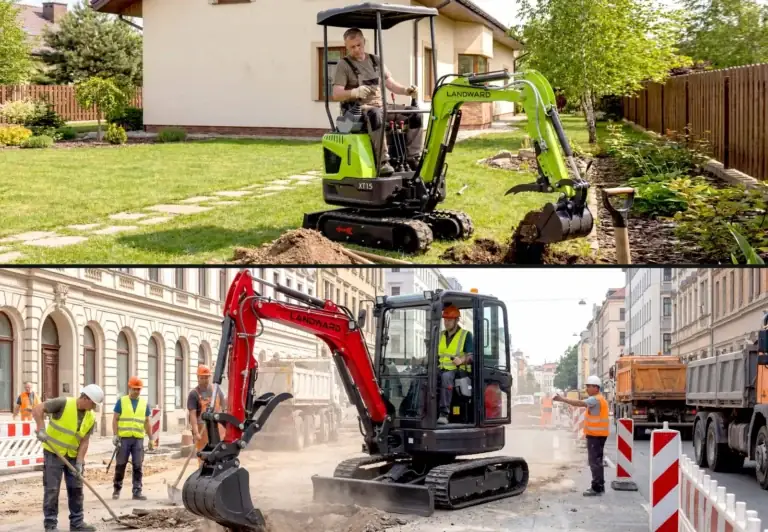
Mini excavators are commonly used for landscaping, property improvement, utility installation, drainage, small foundations, agricultural work, and construction in narrow areas.
Their compact dimensions help operators work near buildings, fences, paths, and other obstacles. Lower machine weight can also simplify transport and reduce the impact on prepared surfaces, although the complete transport arrangement must always be checked.
A mini excavator is not defined by size alone. Buyers should compare digging depth, machine width, tail-swing design, bucket capacity, auxiliary hydraulic specifications, and available attachments.
Selecting the model around the actual task prevents a compact machine from being used beyond its intended working range.
WHEN SHOULD YOU CHOOSE A MEDIUM EXCAVATOR?
Medium excavators are suited to general construction, roadwork, commercial site preparation, larger utility projects, foundation excavation, material handling, and heavier landscaping.
Compared with mini machines, they can provide a stronger platform for deeper digging, larger buckets, heavier attachments, and longer working cycles.
Their additional weight and undercarriage size can improve stability when the application demands more reach or lifting capability.
Buyers should confirm access width, ground conditions, transport dimensions, trailer or truck capacity, service arrangements, and operator familiarity before choosing a medium excavator.
WHICH SPECIFICATIONS SHOULD YOU COMPARE?
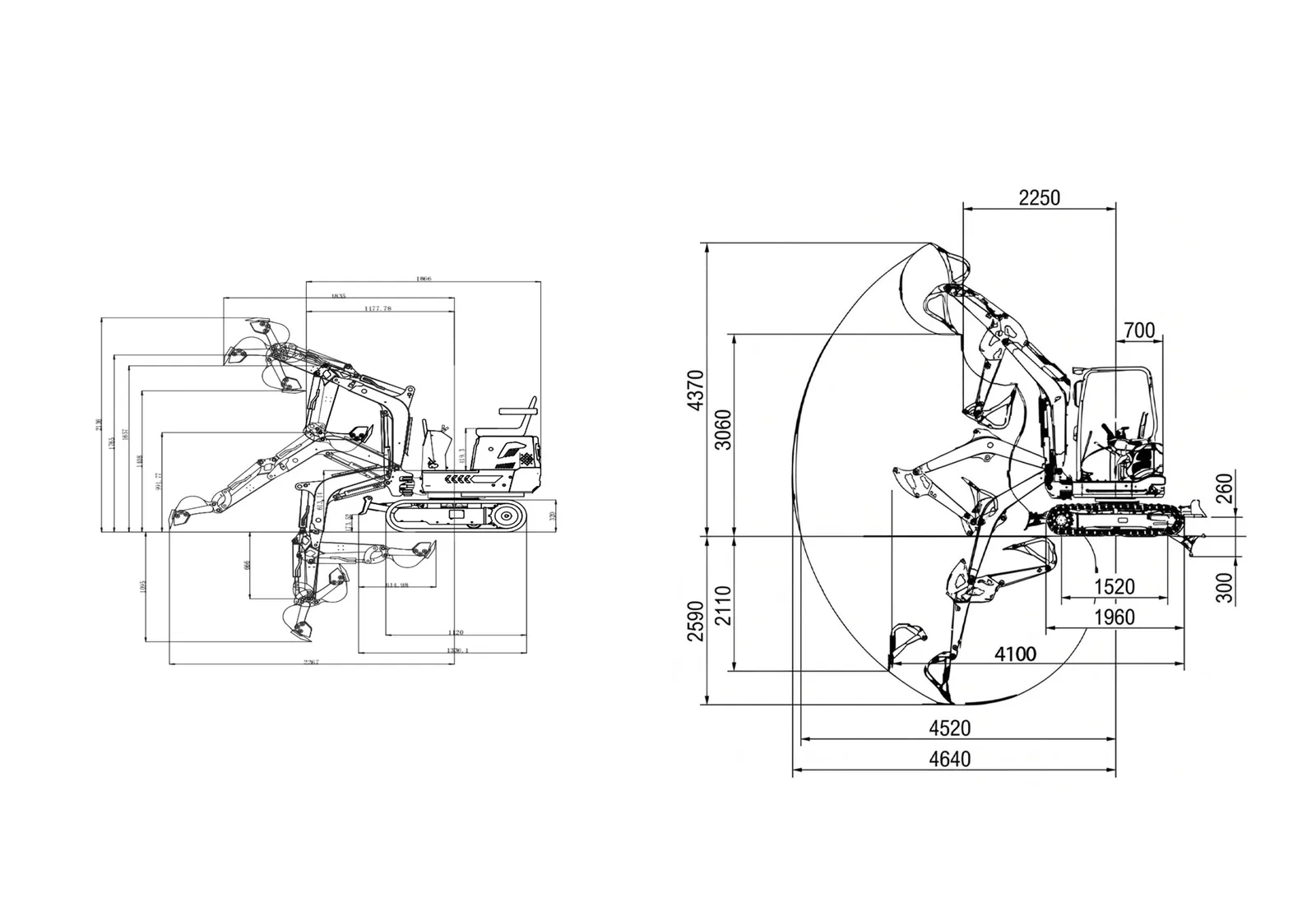
Do not make the decision using operating weight alone. Compare maximum digging depth, reach, dumping height, bucket capacity, hydraulic flow and pressure, engine output, overall width, tail-swing profile, and attachment compatibility.
Also consider the tasks performed most often. Occasional heavy work may not justify choosing a larger machine for every daily job, while repeated deep excavation may expose the limits of a smaller model.
The machine must also match the available access, ground conditions, transportation equipment, operator experience, and maintenance plan.
MATCH THE EXCAVATOR TO YOUR DAILY WORK
Choose a mini excavator when access, maneuverability, surface protection, and transport flexibility lead the decision.
Choose a medium excavator when digging performance, stability, attachment capability, and production are more important.
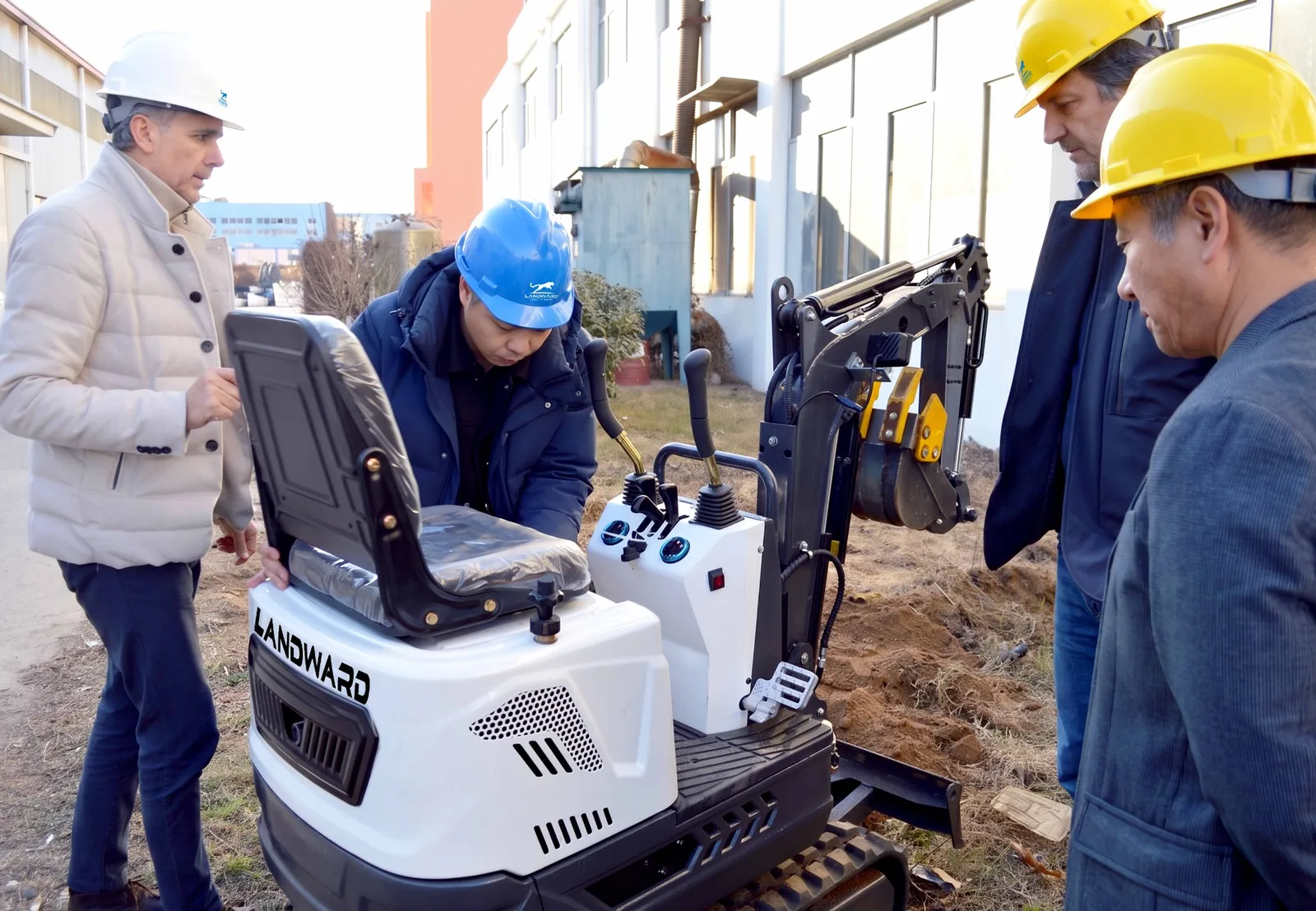
LANDWARD supplies Mini Excavators from 0.6–6 tons and Medium Excavators from 6–26 tons. Our team can compare your application, dimensions, attachments, and performance requirements before recommending a suitable model.